


Sustainability
Our attempt to contribute to sustainability
We firmly believe that the task of achieving a circular and sustainable economy should not be left solely to the political sphere.
That is why, from the very start of the Pazo’s restoration, we have been committed to sustainability—without any legal obligation or subsidies—because we believe that doing so is not only cost-effective (and therefore sensible), but also necessary. And it is possible, even in a 17th-century building.
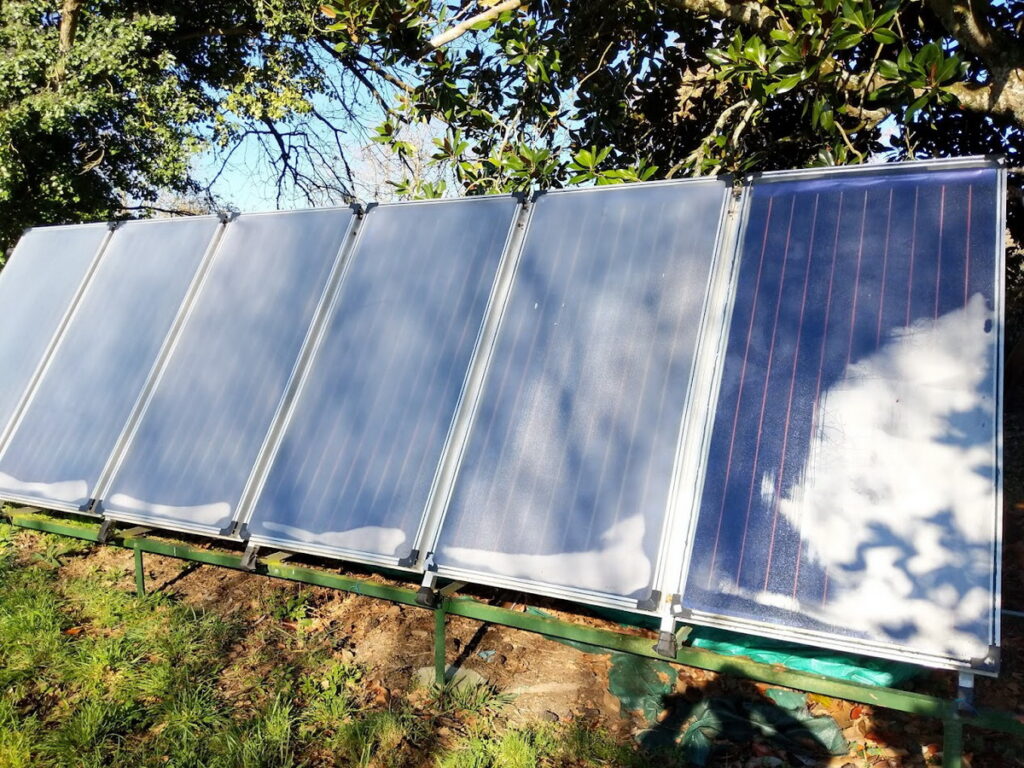
A few figures:
Approximately 95% of the domestic hot water (DHW) required by us and our guests is provided by our two separate solar thermal systems, each with a surface area of 12 square metres. Compared to photovoltaics, solar thermal energy is up to four times more efficient at harnessing solar radiation. We store the thermal energy generated in this way in isothermal storage tanks, allowing us to use the solar-heated water even days later. Naturally, we also use the thermal energy generated in this way to supplement our heating system.
Energy efficiency
Our main heat source consists of three self-contained air-to-water heat pumps from the Panasonic Aquarea range. This technology allows up to 70% of the required heating energy to be extracted from the outside air, even at temperatures well below zero degrees Celsius.
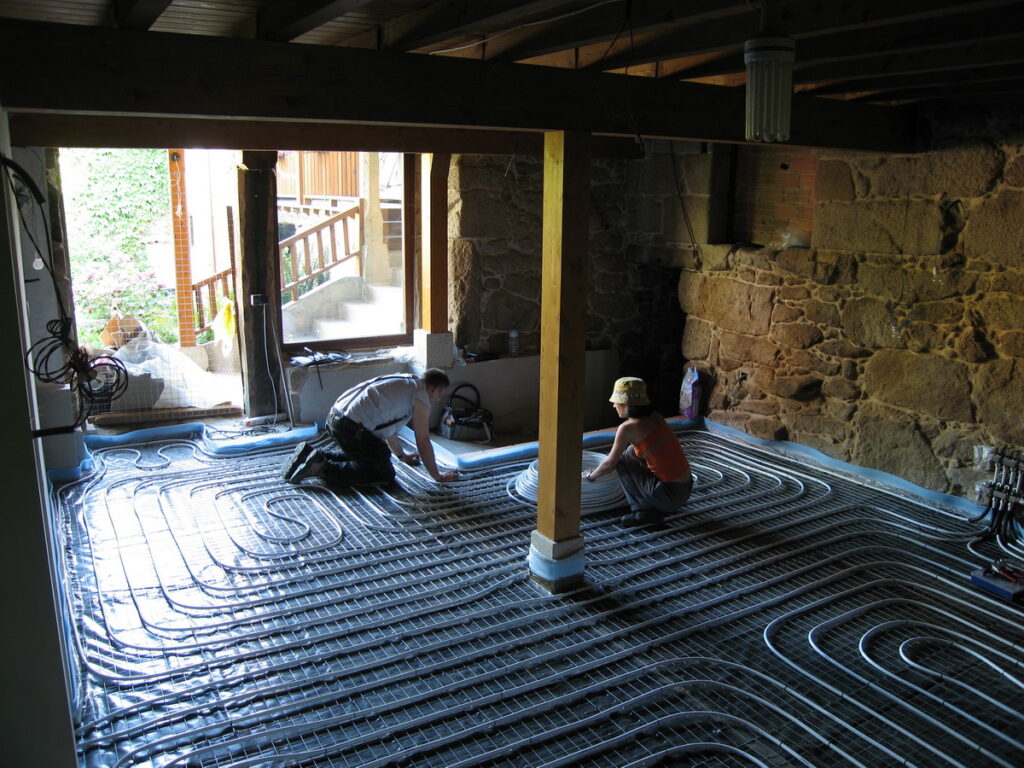
Combined with concentrically laid hydraulic underfloor heating, this not only delivers astonishingly low heating costs but also ensures a comfortable indoor climate even in rooms with very high ceilings, without the condensation typically associated with conventional heating or the air movement caused by radiators – the latter being a particular problem for allergy sufferers due to the circulation of dust.
By way of comparison: the combined electrical power consumption of our three heat pumps is equivalent to that of two toasters: 3 kilowatts (kW).
At peak times, we generate just over three times the energy required to heat the entire pazo using our battery-backed photovoltaic system, approx. 10 kW. This powers battery storage units with a capacity of 25 kWh to see us through the night.
All in all, we have brought three 17th-century buildings close to passive house standard.
Selection of building materials
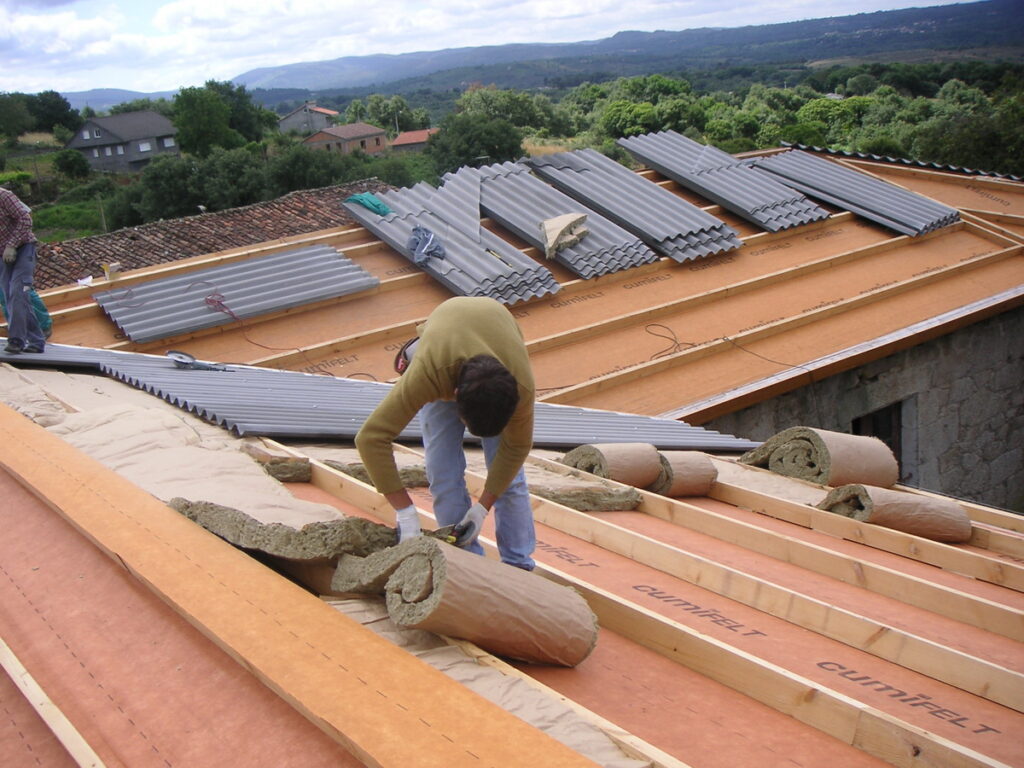
But it’s not just the cold that’s a problem: roof insulation to prevent heat gain in summer is also crucial. Even during construction, we took care to use building materials that were as low in pollutants and as flame-resistant as possible; our roof insulation consists of a semi-permeable membrane combined with ventilated mineral wool. Wall insulation is unnecessary in the Pazo’s construction, with its 80cm-thick granite walls, which were built that way for thermal reasons back then.
Reuse of building materials: Much of the reclaimed timber (beams, rafters) was reused, with a great deal of it installed in a different location to before.
Respecting and promoting biodiversity
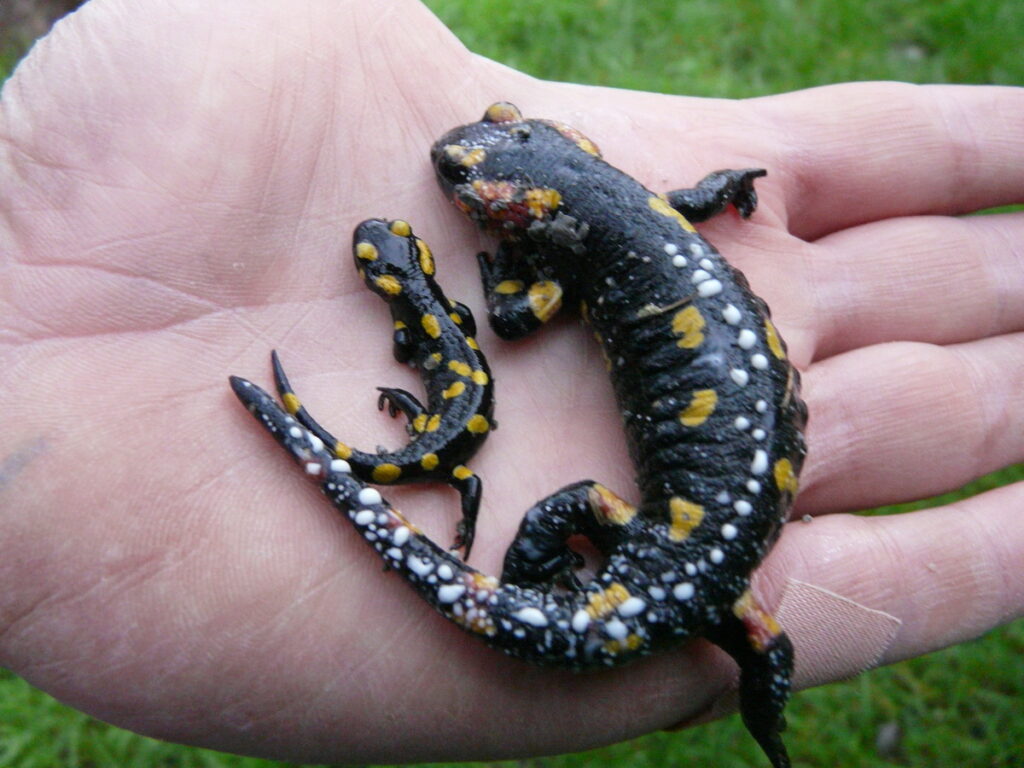
Biodiversity: We aim to provide a garden that is as close to nature as possible, which also means we are delighted to welcome a wide variety of insects, birds and various wild animals.
We therefore ask that you treat all the flora and fauna on our grounds and in the surrounding area with respect.
Composting instead of producing greenhouse gases
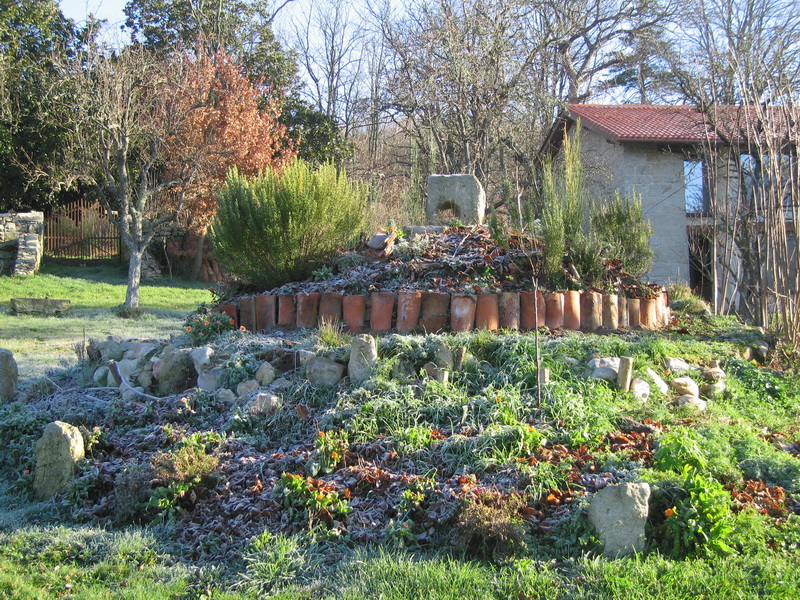
And, of course, we strive to reduce waste wherever possible; where this is not possible, we naturally sort our waste and compost all organic matter. The remarkable amount of biomass produced when clearing the pazo of all the overgrown vegetation was also composted in its entirety, contrary to the local tradition of burning everything.